From Empty Harbour to Urban Utopia: How international Students reimagined Magdeburg's Science Port
What does the city of tomorrow look like? For eleven days this August, a group of international students at Otto von Guericke University went looking for the answer in one very specific place: Magdeburg’s Science Port (Wissenschaftshafen).
Despite it being an extension of the university campus, many students are often unaware of this. The gap between what the Science Port could be and what it currently is was the starting point for URBAN UTOPIA – Cities in the Making - CoCreating Cultural Spaces, a Blended Intensive Programme run under the EU GREEN alliance. Students representing 25 different nationalities from nine partner universities, spent 9–19 August living, learning and building in and around the harbour. Their brief, in the organiser’s own words, was disarmingly simple: come and tell us what’s missing.
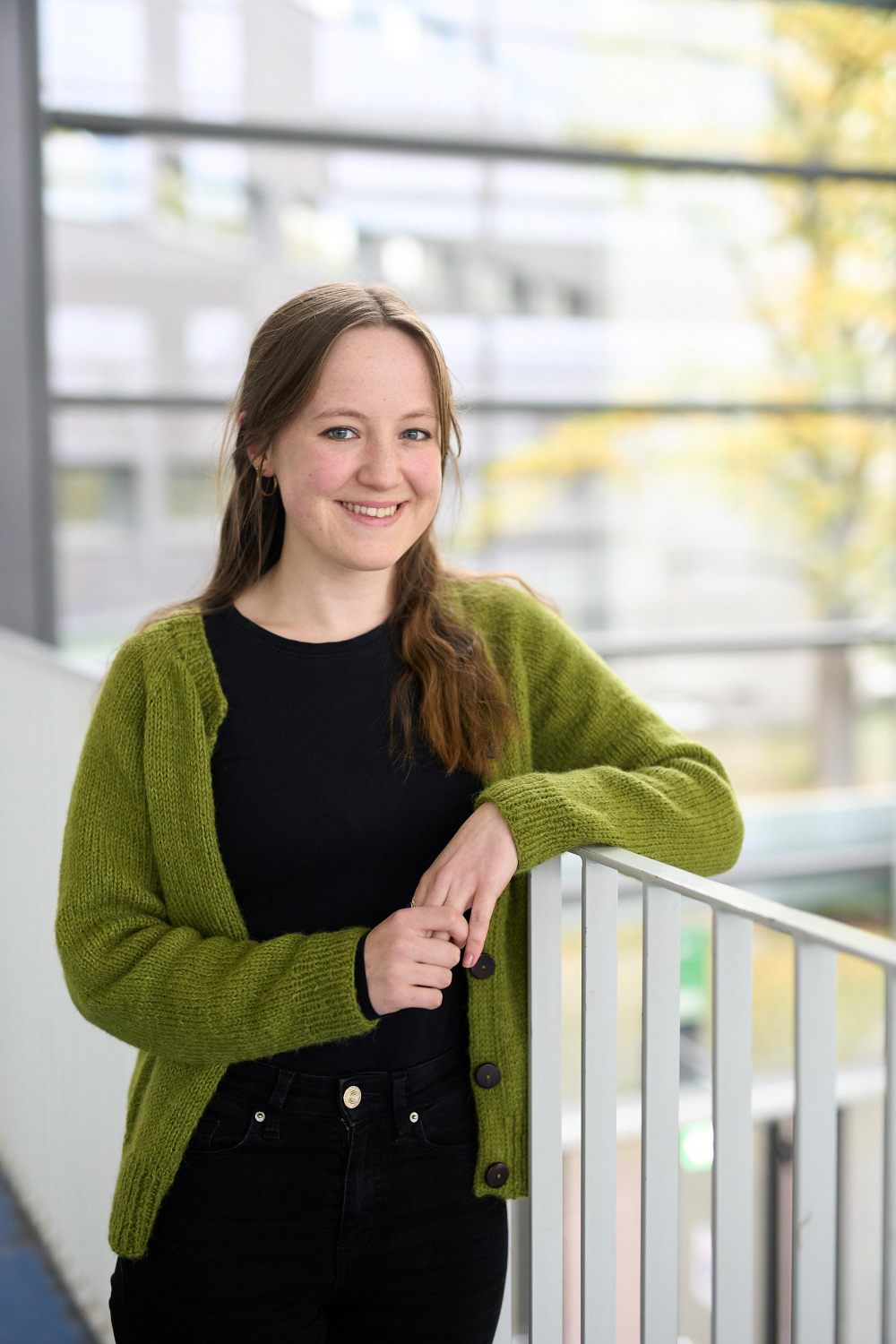
“The Wissenschaftshafen was always meant as an extension of the campus,” explained Jana Richter, the organiser of this blended intensive programme., “but a lot of students still don’t know it belongs to campus at all, and there’s still relatively little there for them. So I found it interesting to bring students here and ask: what’s missing? What would you need to come here? Do you find this place interesting, and would you want to spend time here, if not, why not?”
A Harbour seen with fresh eyes
The programme didn’t begin cold. Online sessions in April, June and July had already given the cohort a and some early ideas before anyone set foot in Magdeburg. But the real introduction to the site happened on day one: a public treasure hunt through the Wissenschaftshafen’s history. This activity allowed the students to explore the space and how it felt to them, allowing them to gain inspiration for the creative work to take place throughout the programme. It was deliberately open to the wider public too, not just the cohort, turning the first day into as much a community event as an orientation exercise.
First impressions of the harbour varied wildly, and that variance turned out to be useful data in itself.
“When I was heading to Magdeburg, I was told it was a very derelict, kind of old city, there was nothing going on,” said Naoise, a Construction Management student from Ireland. “But once I actually arrived, I then realised, oh my god, no, it’s actually so much more. There’s constantly things being planned, everybody is looking at the Science Port to actually get it to be more advanced and to bring people.”
Kasper, a Swedish industrial design student, found something closer to melancholy beauty in it: “It was really like the old buildings, like the magazines and all the boats, you know, seeing like the gone-by era of a place. I thought it was very pretty.”
For Krissi, a local OVGU student, the harbour wasn’t new, but her feelings about it shifted over the course of the programme. “I really thought that it was like a lost area, really empty spaces,” she said. By the end, though: “I kind of feel a bit more hopeful about the future of the Wissenschaftshafen.”
Mornings for Theory, Afternoons for Making
Once the treasure hunt was over, the programme began, following an interesting dual-track structure that turned out to be one of the programme’s defining features. Each participant chose one seminar, run in the mornings and grounded in a specific academic discipline, and paired it with one workshop, run in the afternoons and rooted in a creative or artistic practice. Five of each ran in parallel:
Seminars: “More than Human” – Building an Outdoor Office · Human Rights and Social Inclusion Using Sports for All · Living Meeting Places · Saving and Distributing Water in TransPort · From Vision to Action
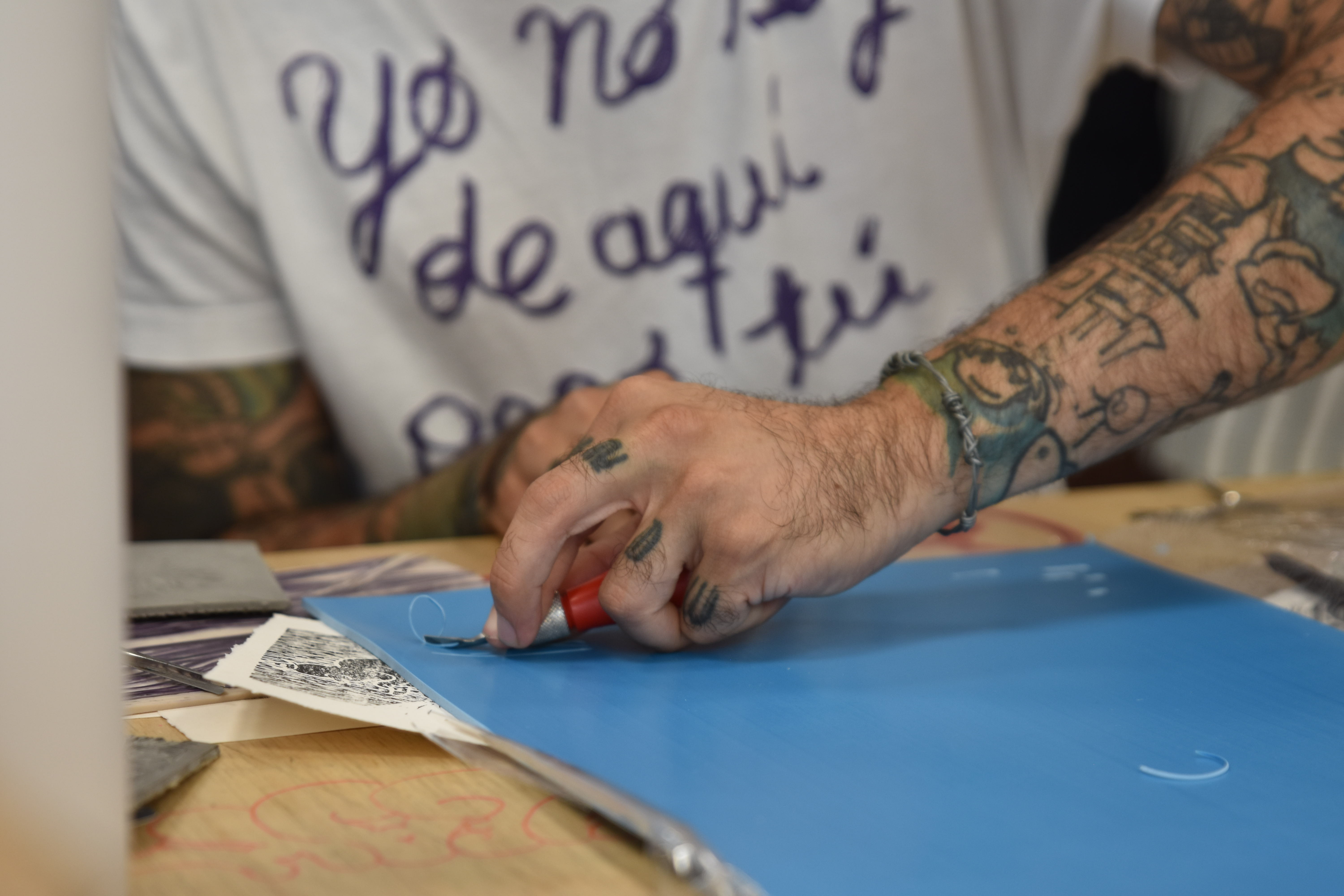
Workshops: Urban Sketching and Linocut · Music Production · Comedy without Words ·Embodiment · Creative Writing
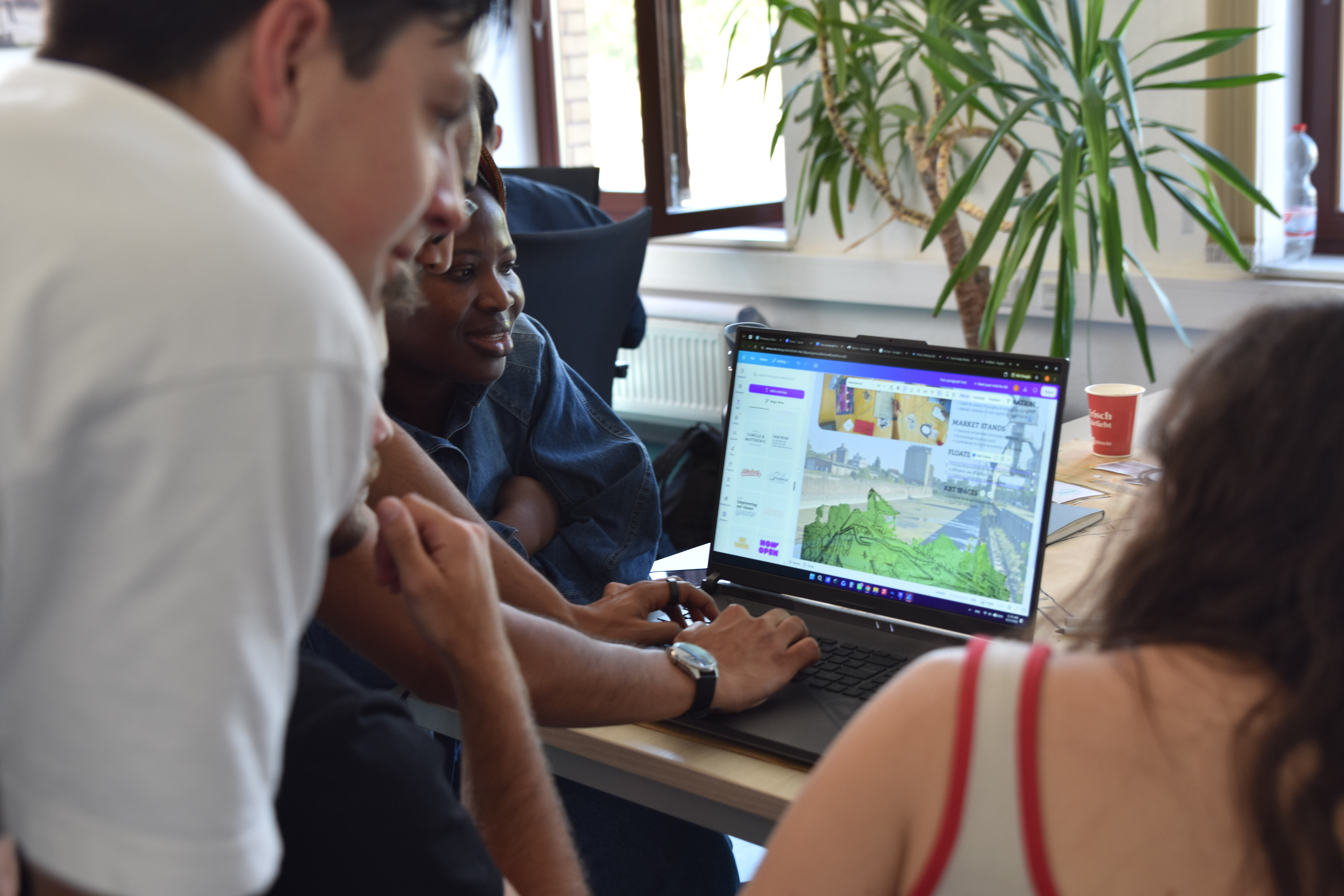
The pairing wasn’t accidental. “I had the idea that I’d like to mix the academic with the artistic, a bit of performative social science,” explained Jana Richter. “Because working academically is one thing, but translating that into something artistic is something else entirely, and you can reach many more, or simply different, people that way." Roughly half the seminar and workshop leaders came forward through the EU GREEN network itself, and the rest were filled from the organiser’s own network in Magdeburg.
For students, the combinations often ended up mattering as much as the individual choices. Julian, a Portuguese architecture student, paired a water-engineering seminar with music production. “it just seemed like a no-brainer,” he said, “and like getting to know a new country, why not?” He found that the seminar’s lessons on green roofs and water distribution mapped directly onto problems he already thought about as an architect. Kasper, working in the Outdoor Office seminar, was struck by how fast ideas became physical: “We had such big results in such a short time, and somehow we managed to do it very well with all the people working together. I was really surprised by the end result. It was way more than I could expect.”
The middle of the programme built in room to step back. On Saturday 15 August, there was a day trip to Teufelsberg in Berlin, a former Cold War listening station built on WWII rubble and now covered in street art, a working example of a derelict site remade by the people who use it.
Working across such different countries, disciplines and expectations was for many students the best part of their experience. “You have to understand what their education level is, what they are interested in, what they enjoy,” said Julian, comparing it to group work back home, where people already know each other. “You can’t make them do something they don’t want to do, but you also have to get them out of their comfort zone.”
For Krissi, a local OVGU student, the highlight was being able to view her city through the eyes of the international participants. “We call it in German Betriebsblindheit, to get blind about stuff that you usually see all the time,” she said. “When there are people that don’t know the area, the place, the usual concepts of study, it’s really nice to come together and just exchange and put something new and creative into it.”
Sometimes the exchange ran deeper than expected, even between students in the same field. “I spoke with someone that’s studying architecture, and in her final year they actually taught them how to use AI for their architecture projects,” said Julian. “For us that’s something unthinkable in Portugal, some professors are starting to get more into that,but most are still far off.”
Jana Richter, watching from the outside,was surprised by how quickly the group dissolved its own early divisions. “At the beginning it was still the group of Swedes and the group of Germans,” she said. “And then already by Tuesday, two days later, the groups started to mix, and everyone was talking to everyone and working with everyone. Our schedule was extremely full, but everyone kept up with it, and so many wonderful things came out of it. I hadn’t expected that much new to emerge.”
AHOY FUTURE: Presenting the Future of the Science Port
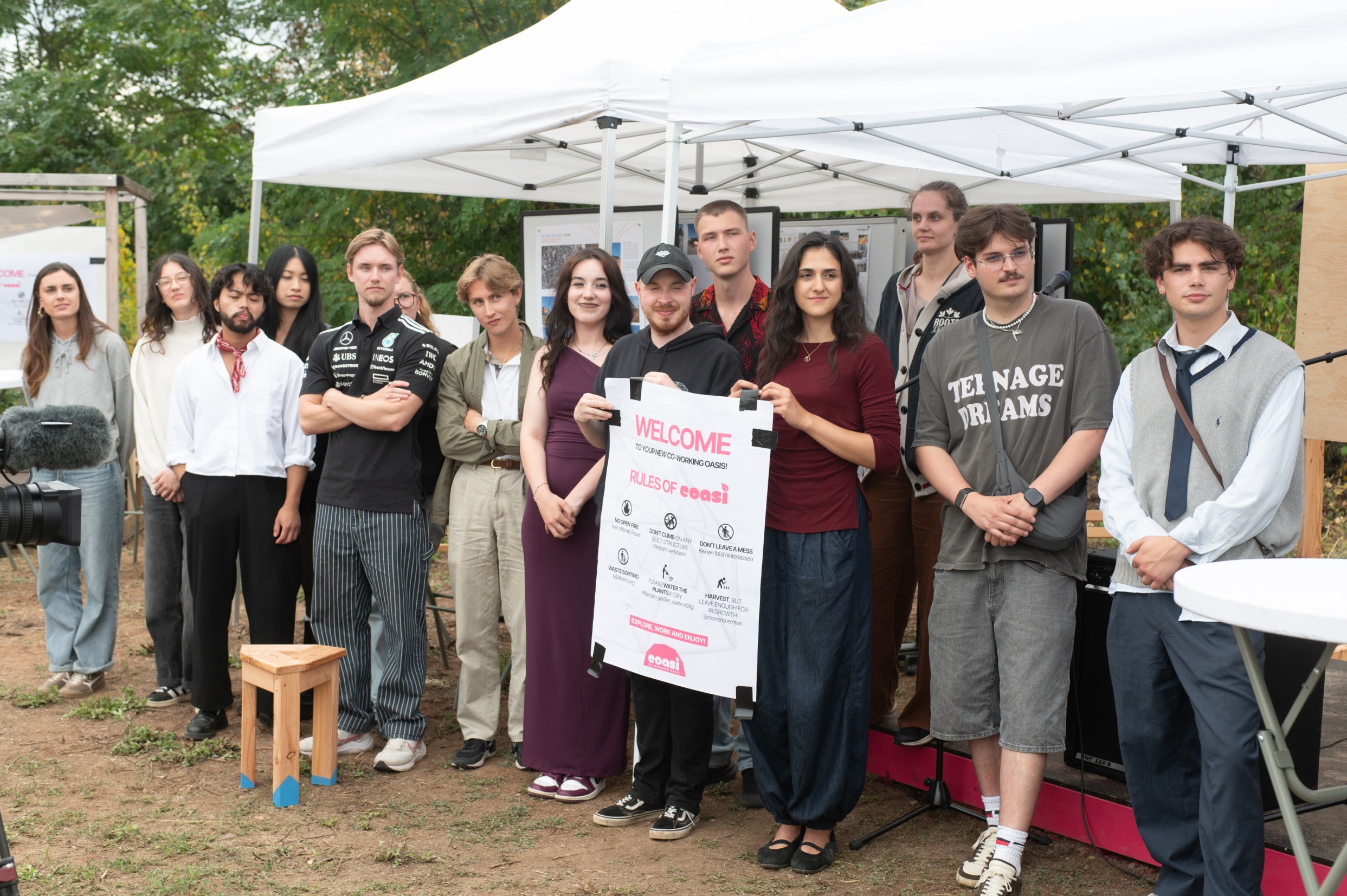
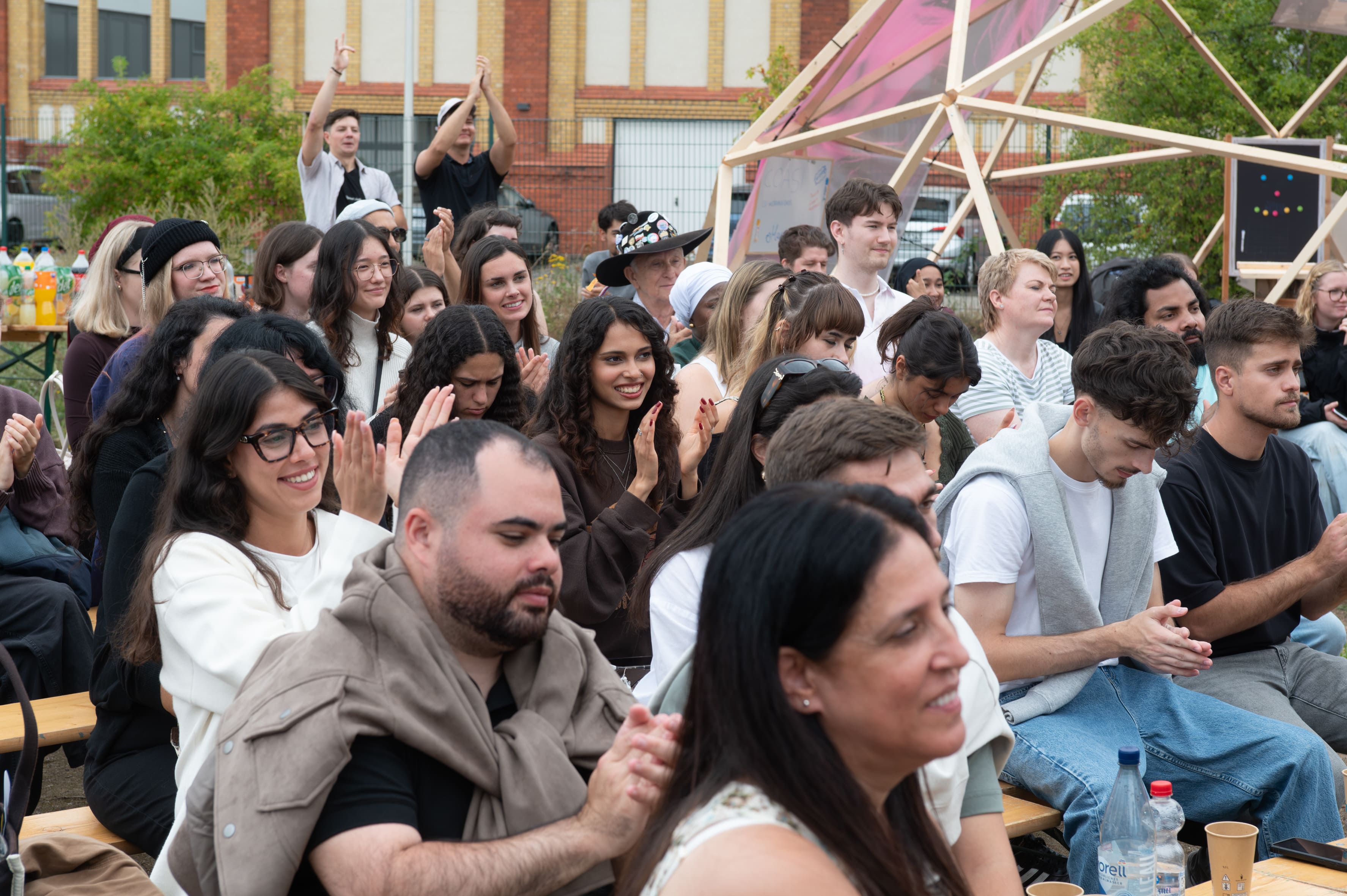
Everything built toward Ahoy Future – ideas for the Science Port, a public festival held at the Science Port on 19 August from 15:00. The international teams presented what they’d developed, their ideas and visions for the Science Port’s future, and their results of the week to Magdeburg residents, researchers and invited guests, turning the site itself into the exhibition space for eleven days of work.
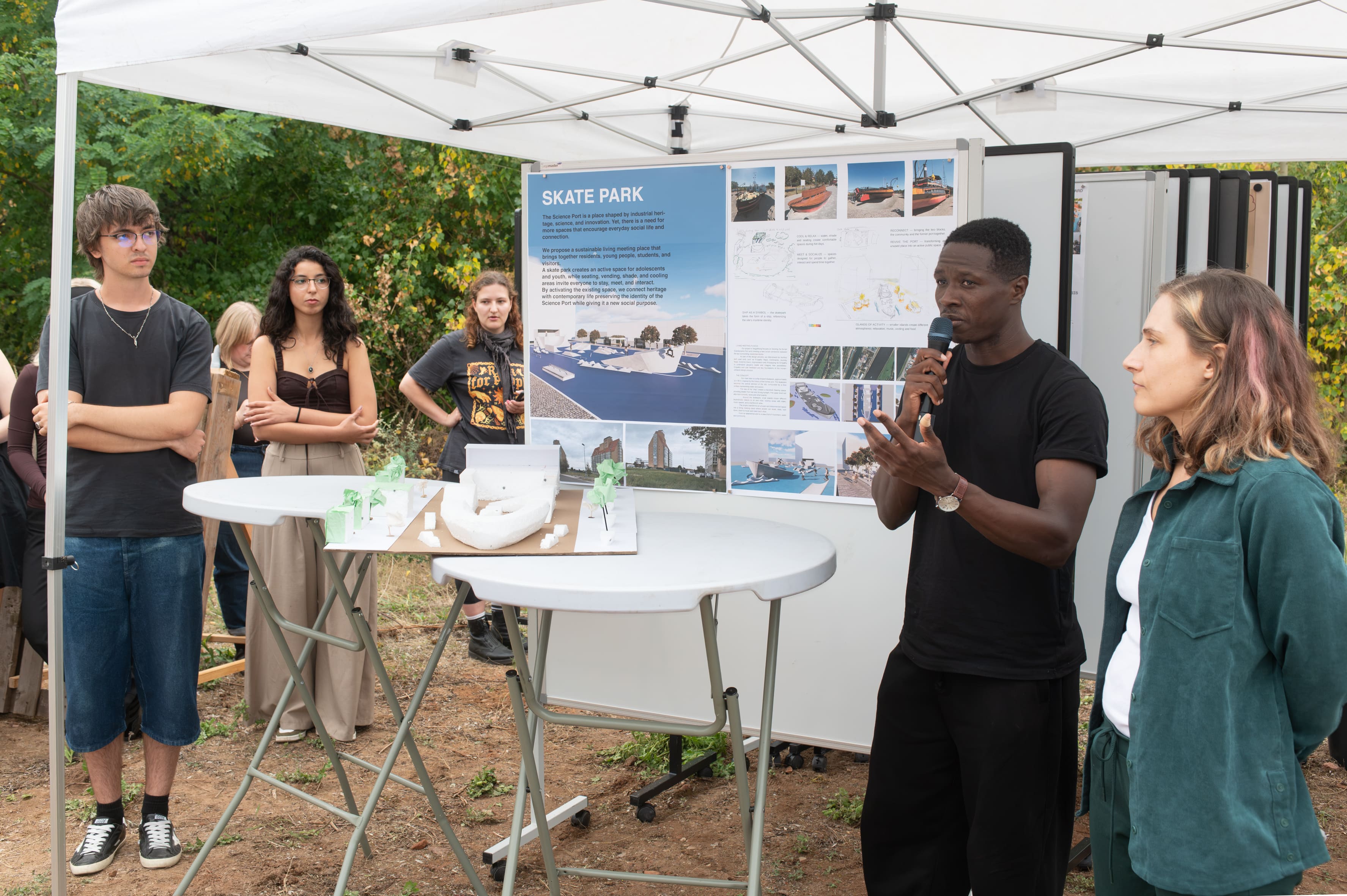
The event opened with a moving musical performance from two participants who had met during the programme and worked together in the music workshop. Then, as each group presented their work, the audience saw models on how our Science Port could be further developed, considering the users and the sustainable aspect, saving water, reclaiming materials, and ensuring the area would be more attractive to different target audiences.
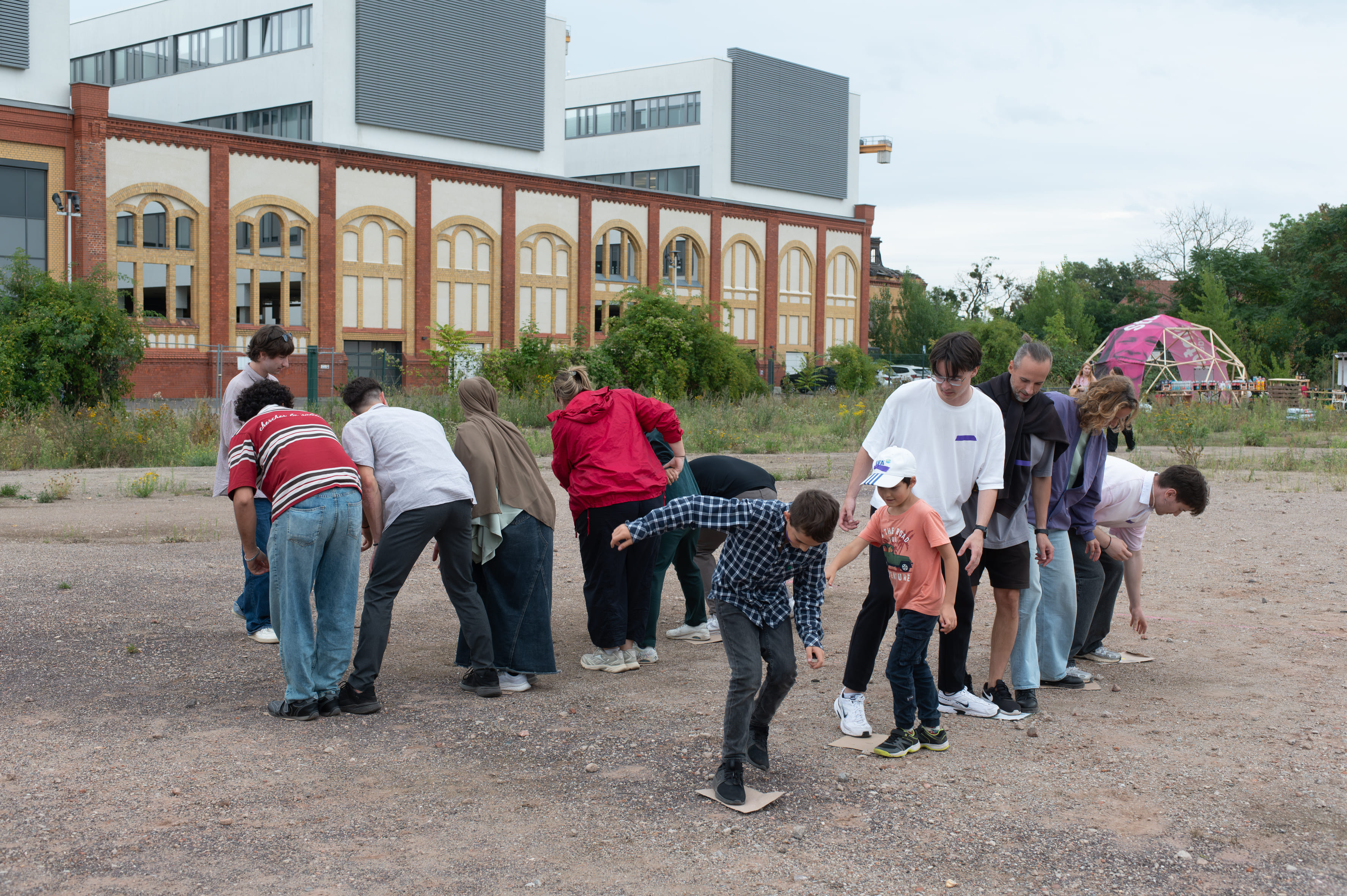
A highlight of the festival was experiencing what had been learned in the workshops. The audience were able toget active and participate in some group sport activities and an embodiment exercise.
Richter was clear that the festival isn’t the end point. Every idea that emerged over the eleven days is being compiled into a printed book, not just a PDF, she was careful to note, but a physical volume with the models, graphics and students’ own written explanations of their concepts. Copies are earmarked for the mayor and for the city’s urban development department. “This book gets distributed,” she said. “One copy goes to the mayor, one goes to the city council or the urban development department.”
What travels home
For a programme built around a specific stretch of Magdeburg harbour, several students were quick to see how the ideas might travel. Naoise, from the port city of Sligo, drew a direct line back home: “We have a lot of green space with nothing to do, I’m sure [our lecturer] wanted to bring people to Sligo because she also knows there’s an area that could be so much more if they just had a group of people come up with an idea, and the idea of investors to just open their eyes. That’s all it takes.”
Asked what she’d take with her beyond the project itself, Krissi didn’t hesitate: “So much. Personally, a lot of new friends, a lot of new cultural experiences. Academically, maybe looking into new fields and trying to see things from a different angle.” Then, more quietly: “Emotionally, kind of happiness and sadness at the same time. Happiness to just be part of this all and getting to know all the beautiful people, and then sadness to leave it all behind.”
Richter’s own closing reflection reached beyond the harbour entirely. Among the 25 nationalities in the room were students from both Ukraine and Russia. “On the political level, that’s one thing,” she said. “But here, we all worked together. Peacefully, and we all understood each other, and everyone was included, and everyone had fun together. Everyone knows the phrase that together we’re stronger than alone, but here it’s proof that people can come together and work together, no matter what’s happening politically in any given country.”

%20kleine%20gr%C3%B6%C3%9Fe.jpg)
.jpg)



.jpg)

%20(1).jpg)